Back in 1999, I took my first steps on Clark University with the intention of majoring in Computer Science and obtaining an MBA. The great thing about College is sometimes you decide to go in a different direction in life. I think it was the space shuttle Challenger case study which turned me off of business. So I focused on Computer Science being my future. Little did I know life would bring me back to business as a career.
I followed a typical technical path of developer, senior developer, and eventually software architect. I have mixed feelings about that last title as I was more playing the role of technical and team lead than pure head in the clouds modeling. Then something odd happened on the way to the airport.
After finally making my way though Logan Airport security I looked at my phone to see slack messages with “congratulations” and “look forward to working under your leadership.” I messaged my manager at the time asking if I missed anything and I got the response “he didn’t tell you.” A few phone calls later I learned that my 2nd line made me a manager.
Now training followed which was provided by IBM. However most of my training came with experience afterwards. Wow, did I get experience. I have had to work with everything from employee love triangles to international espionage. Of course it is nothing I can share which is the hardest part of being a manager. My personal belief is transparency leads to trust and as a manager you can’t always be transparent.
I think of myself as a technical manager as I am still an individual contributor. However as I have increased my number of reports and teams that report to me that has become harder. I am still a believer of leading from the front and getting your hands dirty. Using a combination of tech focal or team lead, setting expectations, and knowing when to write code or jump on a call with a customer helps bring my life/manager/contributor into balance.
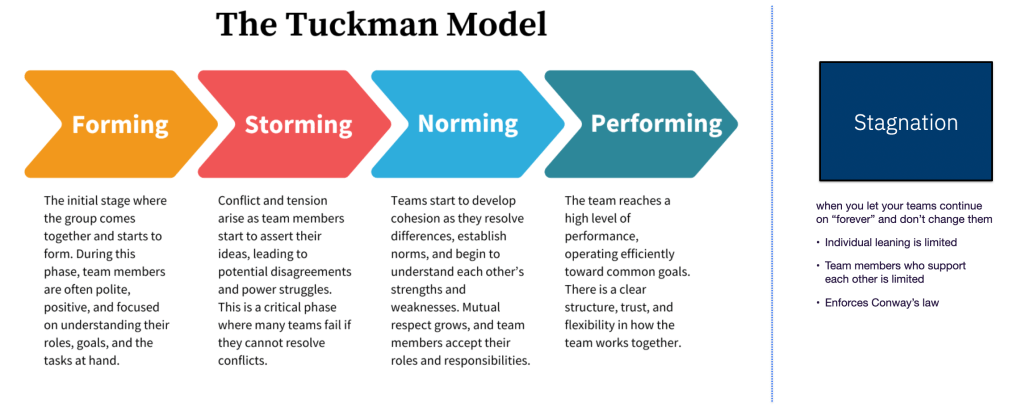
I once said as an architect all I could do was document what should be done now as a manager I have people to make it happen. That is still mostly true with the exceptions of matrix employees. Employees love to tell you about their current projects. As a manager you can take that insight and make business decisions around that. However when their day to day doesn’t align with your mission business decisions then your role can feel diminished. Nevertheless over the years I’ve found matrix employees is fine and healthy as long as they are in the same org and have an aligned mission. I guess Conway’s law is alive and well.
I really do enjoy being a manager. As an agile developer I am a firm believer in the Agile Manifesto‘s “Individuals and interactions over processes and tools.”However I never got to truly focus on the “Individuals and interactions” until I became a manager.


 Aaron Cohen