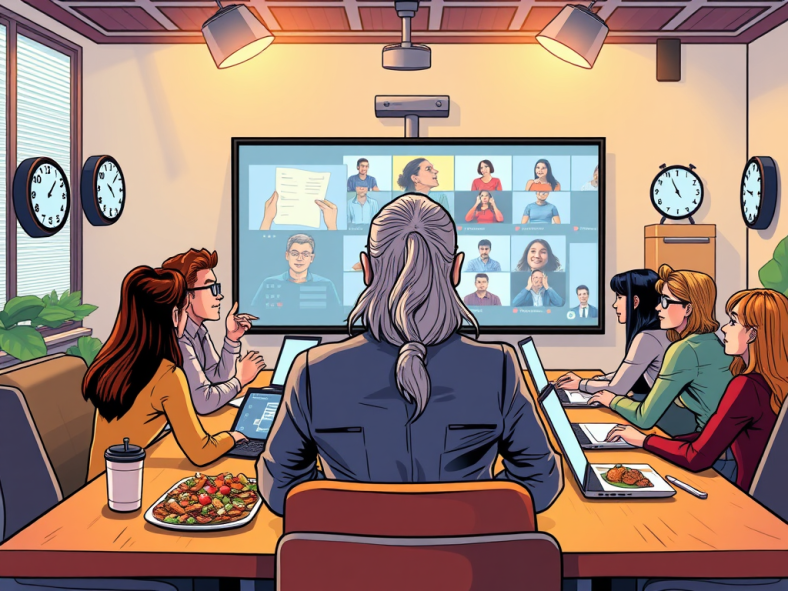
First all hands: Lessons in ordering food online across timezones.

I wanted to do an all hands when I first became a 2nd line manager. My goal was to highlight who I am and any changes. Unfortunately the first thing every new manager changes is nothing. The third thing is be everything. Nevertheless I had nothing to highlight. So I pushed it off and now after 3 months it was time.

The slide deck was the easy part. It follows the typical format of celebrations, HR highlights, culture highlights, and looking ahead. The hard part was food. Food becomes a catalyst for engineers coming together. During Covid we started using GrubHub and just allocated everyone spending limits. Problem was after the call ended so did the conversation.

My team is spread across eight timezones from California to Ireland. So 5 pm in Ireland is 9 am in California. I wanted each team to come into the office, eat, listen, then continue to socialize afterwards. Hallway conversations are a great source of “How can we be better” conversations. So I need to order food to be delivered to 6 lab locations.

The typical playbook for this is to have a local manager organize food. Often it ends up being the local cafeteria catering. To get teams excited to come into the office for food I wanted to give them skin in the game.

In our org channel I asked each group to vote on which place to order delivery from for their location. I just brought up yelp and selected places that had delivery at random. In some locations, no one liked any of the options. An argument started about which pizza place in New York City was better. I didn’t mind this because people were engaged and working towards a single decision. Other places it was an even split and they needed a tie breaker who formerly stayed on the side lines. In one case I was surprised the tie breaker eventually went against her husband who was on the same team.

I then started threads on what to order at each restaurant and it was crickets. If I don’t hear back by a certain time, I will put the menu into excel. The function =INDEX($A$2:$A$10,RANDBETWEEN(1,COUNTA($A$2:$A$10)),1) will choose. Every menu has items someone doesn’t want to get. Feedback with suggestions was instant.
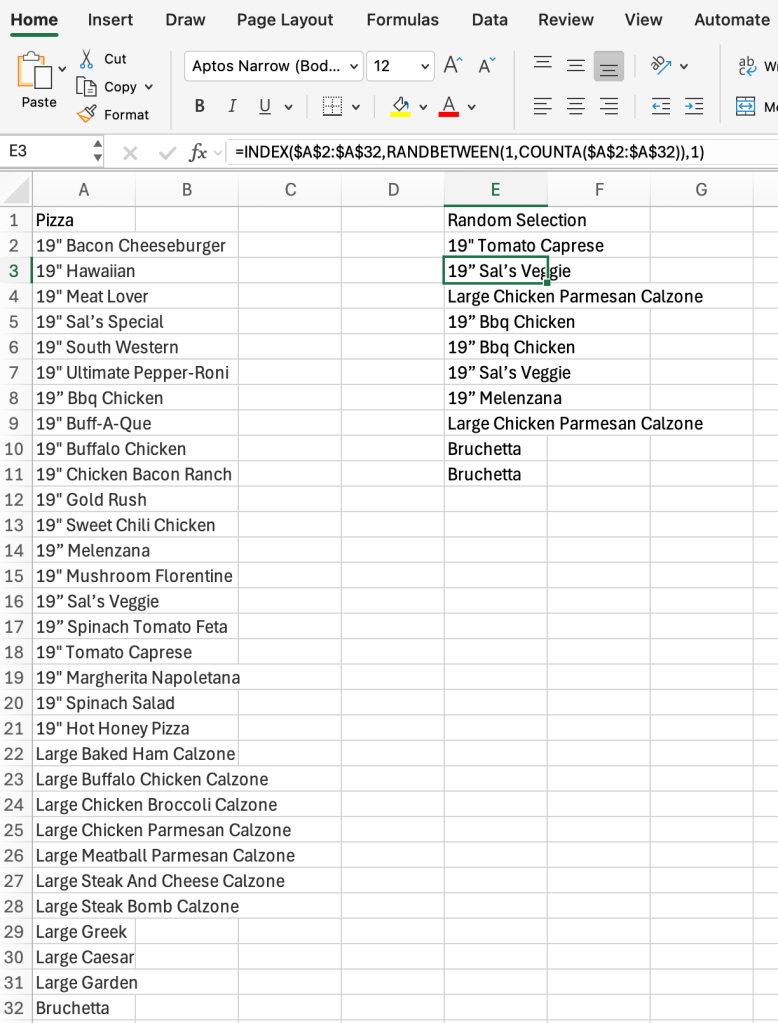
Example of =INDEX($A$2:$A$10,RANDBETWEEN(1,COUNTA($A$2:$A$10)),1)

So now what went wrong. First I discovered some restaurants will not inform you about delivery limitations. They don’t mention they don’t deliver to a location until you hit “process” on the order. This led to last minute changes in vendor and trying to find equivalent items.

Websites sometimes automatically update the order using the timezone difference between your browser and the restaurant. This is another fun discovery. So you subtract an hour to align with Austin timezone but instead the order is placed 2 hours early.

Not all places deliver breakfast. Also in places like San Francisco traffic is horrid so employees try to come into the office at off times. So for some I just had to order them lunch at a later time.


Improving Employee Performance Through Insightful Metrics

When I was a first line manager with only a handful of employees measuring performance was easy. You can be a “walk around manager” constantly seeing their accomplishments and giving them feedback. Now I am a manager of managers and have far more employees reporting to me. One of my challenges has been how to devote enough time to employees to know them properly. To know how well they are doing and give them feedback. I recently read Decisive: How to Make Better Choices in Life and Work by Chip & Dan Heath. An example from the book was Van Halen.

When the band toured the technical requirements of their shows were immeasurable. So they added contract riders with heavy consequences. Most notably, their riders specified that a bowl of M&M’s candies was to be placed in their dressing room. Separately, in a different area of the contract, all of the brown M&M’s were to be removed. This sounds absurd. Yet, it quickly became an indicator. This showed that the electrical, structural, security, and safety requirements in the contract had been thoroughly observed.

So how do we apply this developers, testers, or even managers? I really don’t like performance metrics tied to code written, test performed, defects found, or projects accomplished. I found those metrics are too easily gained and reinforce the wrong behaviors. Luckily, the company I work for has a list of behaviors they want to see in employees. An example is “work across other teams to improve your solution.” These behaviors are not directly related to performance of source code or quality of the product. Just like the M&Ms it can be an indicator of an ask of the business that is missed.

I rank all employees based on these behaviors. I then ask what the top employees are doing that the bottom are not? The answer to that question then gives me new metrics to drive improvements to performance. Yes this sounds like a moving target and transparency is key. Managers can now have a conversation with employees who are low performers like:

“We have noticed that the top performers in the organization have participated in knowledge shares. What can you share with the greater team?”

The goal of this exercise is to constantly find ways to improve the organization’s performance. It is not meant to find ways to remove low performers. You don’t drown by falling into the water. You drown by staying there.

From Developer to Manager: My Unexpected Journey

Back in 1999, I took my first steps on Clark University with the intention of majoring in Computer Science and obtaining an MBA. The great thing about College is sometimes you decide to go in a different direction in life. I think it was the space shuttle Challenger case study which turned me off of business. So I focused on Computer Science being my future. Little did I know life would bring me back to business as a career.

I followed a typical technical path of developer, senior developer, and eventually software architect. I have mixed feelings about that last title as I was more playing the role of technical and team lead than pure head in the clouds modeling. Then something odd happened on the way to the airport.

After finally making my way though Logan Airport security I looked at my phone to see slack messages with “congratulations” and “look forward to working under your leadership.” I messaged my manager at the time asking if I missed anything and I got the response “he didn’t tell you.” A few phone calls later I learned that my 2nd line made me a manager.

Now training followed which was provided by IBM. However most of my training came with experience afterwards. Wow, did I get experience. I have had to work with everything from employee love triangles to international espionage. Of course it is nothing I can share which is the hardest part of being a manager. My personal belief is transparency leads to trust and as a manager you can’t always be transparent.

I think of myself as a technical manager as I am still an individual contributor. However as I have increased my number of reports and teams that report to me that has become harder. I am still a believer of leading from the front and getting your hands dirty. Using a combination of tech focal or team lead, setting expectations, and knowing when to write code or jump on a call with a customer helps bring my life/manager/contributor into balance.

I once said as an architect all I could do was document what should be done now as a manager I have people to make it happen. That is still mostly true with the exceptions of matrix employees. Employees love to tell you about their current projects. As a manager you can take that insight and make business decisions around that. However when their day to day doesn’t align with your mission business decisions then your role can feel diminished. Nevertheless over the years I’ve found matrix employees is fine and healthy as long as they are in the same org and have an aligned mission. I guess Conway’s law is alive and well.

I really do enjoy being a manager. As an agile developer I am a firm believer in the Agile Manifesto‘s “Individuals and interactions over processes and tools.”However I never got to truly focus on the “Individuals and interactions” until I became a manager.